Muslim Horoscope
1. What is the Muslim Horoscope?
The Muslim Horoscope is based on the 28 real stars or lunar mansions, known as Manāzil al-Qamar, which form an Islamic celestial system based on the Moon’s nightly movement across the sky, historically used for calendars, agriculture, weather prediction, and even personality reflection. In this table, we offer a symbolic yet thoughtful model to explore human personality traits as potentially influenced, not by stars themselves, but by the seasonal, environmental, and psychological conditions surrounding one’s time of birth.
A well-known Muslim polymath, Imam Abu Muhammad Abdullah ibn Muslim ibn Qutaybah (213-276 AH), in his renowned work Kitāb al-Anwā’, emphasizes the practical and empirical nature of Arab astronomical knowledge. He writes:
Translation:
He goes further:
ولحاجتهم إلى التقلب فى البلاد والتصرف إلى المعاش وعلمهم، أن لا تقلّب ولا تصرّف فى الفلوات إلا بالنجوم، عنوا بمعرفة مناظرها. ولحاجاتهم إلى الانتقال عن محاضرهم إلى المياه وعلمهم، أن لا نقلة إلا لوقت صحيح يوثق فيه بالغيث والكلاء، عنوا بمطالعها ومساقطها. هذا مع الحاجة إلى معرفة وقت الطرق ووقت النتاج ووقت الفصال، ووقت غور مياه الأرض وزيادتها [و] تأبير النخل، ووقت ينع الثمر ووقت جداده، ووقت الحصاد، ووقت وباء السنة فى الناس وفى الإبل وغيرها من النعم بالطلوع والغروب.
“Because of their need to travel through the land and manage their livelihoods, and their knowledge, they [the Arabs] did not move or conduct operations in the wilderness except according to the stars; they focused on knowing the positions and appearances of the stars. And because of their need to move from their settlements to the water sources, and their knowledge, they did not make a journey except at a proper time that could be relied upon for rainfall and the management of flocks; they focused on the rising and setting of the stars. This was coupled with the need to know the proper times for travel, for conception and birth, for irrigation of the land and its augmentation, for tending the palm trees, for the ripening of fruit and its renewal, for the harvest, and for predicting epidemics of the year among people, camels, and other blessings, based on the observation of the stars’ rising and setting.”
Imam Ibn Qutaybah (828–889 CE), in his seminal work Kitāb al-Anwā’, provides a comprehensive discussion of the 28 Manāzil al-Qamar—the lunar mansions. He meticulously documented:
- Their locations in the sky – Ibn Qutaybah identified each mansion relative to prominent stars and constellations, showing that Arabs had a precise star map centuries before modern astronomy.
- Heliacal rising and setting times – He recorded when each lunar mansion first appeared in the pre-dawn sky (heliacal rising) and when it disappeared in the evening (heliacal setting). These observations were seasonally significant, marking transitions in weather, agricultural cycles, and navigational cues. For instance, the heliacal rising of al-Thurayyā (the Pleiades) indicated the onset of summer, while other mansions guided sowing, harvesting, or travel.
- Practical applications for daily life – Ibn Qutaybah emphasized that Arabs used these lunar mansion observations for navigation, grazing, irrigation, and timing of journeys, as well as predicting environmental and social events, such as rainfall, crop readiness, and even the health of people and animals. He described how shepherds, travelers, and sailors relied on the stars to plan their movements and manage resources.
- Integration of observation with lived experience – Ibn Qutaybah stressed that the Arabs’ knowledge of the lunar mansions was empirical, tested, and reliable. He noted that they did not move in the wilderness or engage in important activities except in accordance with the stars’ positions, showing a deep alignment between celestial observation and practical necessity.
In essence, Ibn Qutaybah’s work preserves a rich record of pre-Islamic and early Islamic astronomy, demonstrating that lunar mansions were both precise astronomical markers and functional guides for life in desert and pastoral societies. This foundation makes it clear why later symbolic or psychological systems can legitimately use the mansions as archetypal templates, rooted in centuries of careful observation.

The word horoscope comes from the Greek hōroskópos (ὡροσκόπος), formed from hṓra (ὥρα) meaning “time,” “hour,” or “season,” and skopós (σκοπός) meaning “observer” or “watcher.” In its original usage, a horoskopos was not a fortune-teller but a time-observer—specifically the point of the stellar rising on the eastern horizon at a given moment, used to mark and record time. In Hellenistic astronomy, the term referred to the precise astronomical configuration of the heavens at a moment, especially the rising sign, which functioned as a temporal marker much like a celestial clock. Only in later centuries, as speculative astrology separated from observational astronomy, did “horoscope” come to be popularly associated with future prediction and personal fate. Historically and etymologically, however, the term belongs to the tradition of astronomical timekeeping and celestial observation, concerned with when something occurs in cosmic order rather than what will happen in human destiny.
While Islamic and scientific traditions do not recognize astrological determinism, both acknowledge the undeniable role of birth season, circadian timing, and climatic factors in shaping human development. Medical studies have shown links between season of birth and traits such as mood, cognition, and susceptibility to certain disorders. Analytical psychologist Carl Jung also proposed that universal archetypes and symbolic cycles influence the collective and personal unconscious, aligning deeply with recurring natural patterns, such as those observed in lunar cycles. This model uses an advanced form of Carl Jung’s Archetypes.
Therefore, this model approaches the Manāzil as symbolic mirrors of inner potential, representing both light traits (strengths, aptitudes) and shadow traits (challenges, risks). The aim is not prediction but reflection—to invite self-understanding through the ancient sky’s metaphorical language, tempered with scientific insight and spiritual humility. The Muslim Horoscope is an intellectual effort to read the signs of the sky and discover the personal traits.
“The light and shadow traits associated with each lunar mansion are symbolic representations of psychological tendencies, informed by historical observation, comparative tradition, and recurring patterns noted across diverse cultures and time periods. They are not presented as deterministic or causal facts, but as interpretive frameworks for self-reflection and psychological insight.”
Just as epigenetics demonstrates that genetic predispositions are not fixed but are modulated by environmental and experiential factors from the earliest stages of life, the Sun Burj and Moon Burj serve as a conceptual mirror of this formative period. It reflects the subtle interaction between innate potential and the conditions surrounding birth, capturing the notion that psychological tendencies may begin to take shape according to the circumstances and timing of one’s arrival. In this sense, the Buruj do not determine personality or fate, but symbolically mark the phase during which epigenetic influences and early environmental stimuli begin to interact with the individual’s biological and psychological blueprint, setting the stage for the later emergence of traits, patterns of behavior, and characteristic responses. By framing it this way, Buruj provide a metaphorical tool for understanding the interplay between inherited potential and life’s early shaping influences, aligning the symbolic language of astronomy with contemporary insights from developmental biology and epigenetics.
Deterministic Foundations of the Muslim Horoscope
The Muslim Horoscope system, as demonstrated by empirical testing across centuries and individual birth dates, is best understood as a deterministic projection of celestial mechanics rather than a metaphorical or symbolic construct. Its outcomes arise directly from the measurable motions of the Sun and Moon along the sidereal ecliptic, divided into fixed stellar segments known as the lunar mansions. When these motions are computed without tropical anchoring or artificial correction factors, the same Sun and Moon Burj recur predictably after the 19-year Metonic cycle, on the same civil date, for all epochs. This repeatability is not an interpretive choice but a mathematical consequence of the resonance between the sidereal year and the synodic month. Unlike symbolic astrology, which assigns meaning independently of physical recurrence, the Muslim Horoscope derives its structure from the sky itself: stars define the reference frame, lunar motion defines subdivision, and recurrence validates the system. Meaning is therefore secondary to mechanism; interpretation follows observation. In this sense, the horoscope functions as a chronometric map of celestial order, grounded in astronomy, verifiable by calculation, and falsifiable by observation, rather than as an abstract language of signs detached from physical reality.
2. The Islamic Approach to Celestial Bodies
Allah Almighty said:
هُوَ الَّذِیْ جَعَلَ الشَّمْسَ ضِیَآءً وَّ الْقَمَرَ نُوْرًا وَّ قَدَّرَهٗ مَنَازِلَ لِتَعْلَمُوْا عَدَدَ السِّنِیْنَ وَ الْحِسَابَؕ-مَا خَلَقَ اللّٰهُ ذٰلِكَ اِلَّا بِالْحَقِّۚ-یُفَصِّلُ الْاٰیٰتِ لِقَوْمٍ یَّعْلَمُوْنَ
“It is He who made the sun a shining light and the moon a luminous object, and determined for it phases (manazil) that you may know the number of years and the calculation of time. Allah did not create this except in truth. He explains the signs in detail for people who know.”
(Surah Yunus 10:5)
Allah Almighty said:
وَلَقَدْ جَعَلْنَا فِي السَّمَاءِ بُرُوجًا وَزَيَّنَّاهَا لِلنَّاظِرِينَ
“And indeed We placed burūj in the sky, and We adorned it for those who look.”
(Surah al-Hijr 15:16)
تَبَارَكَ الَّذِي جَعَلَ فِي السَّمَاءِ بُرُوجًا وَجَعَلَ فِيهَا سِرَاجًا وَقَمَرًا مُّنِيرًا
“Blessed is He who placed burūj in the sky, and placed therein a shining lamp and a luminous moon.”
(Surah al-Furqan 25:61)
وَالسَّمَاءِ ذَاتِ الْبُرُوجِ
“By the sky endowed with burūj.”
(Surah al-Buruj 85:1)
Explanation (with focus on the meaning of Burūj):
The key word in this verse is burūj (plural of burj). In classical Arabic, burj originally means something high, prominent, and clearly visible, such as a tower or a fortified structure. When this word is applied to the sky, it does not refer to ordinary, faint stars, but to exceptionally bright, prominent celestial objects.
Classical Qur’anic commentators explained burūj as distinct and striking stellar formations—groups of stars or major stars that stand out from the rest of the sky and can be easily recognized by observers. These are the stars that appear fixed, elevated, and visually dominant, serving as natural markers in the heavens.
The phrase “We adorned it for those who look” emphasizes that these burūj are not only functional (for recognition and orientation) but also aesthetic. Their exceptional brightness and clarity make the sky beautiful and captivating to the human eye. They draw attention, invite contemplation, and reflect order and harmony in the cosmos.
In essence, this verse presents burūj as:
- exceptionally bright and prominent stars or stellar groupings,
- elevated celestial markers that stand out in the sky, and
- elements of divine beauty that adorn the heavens for human observers.
Thus, burūj conveys both visibility and grandeur, pointing to a sky designed not randomly, but with striking lights that signify order, beauty, and purposeful creation.
Why Zodiac Signs Are Not Burūj in Qur’anic Terminology
In Qur’anic language, burūj refer to real, objective, and created celestial features—specifically exceptionally bright and prominent stars or stellar structures placed in the sky by Allah. They are described as made, placed, and adorning the heavens, which indicates physical astronomical realities, not symbolic constructs.
By contrast, zodiac signs (Aries, Taurus, etc.) are human-devised divisions of the sky. They are imaginary segments along the ecliptic, created for classification, astrology, and calendar systems. They do not correspond to fixed, independent celestial objects; rather, they are interpretive overlays imposed by human observation and convention.
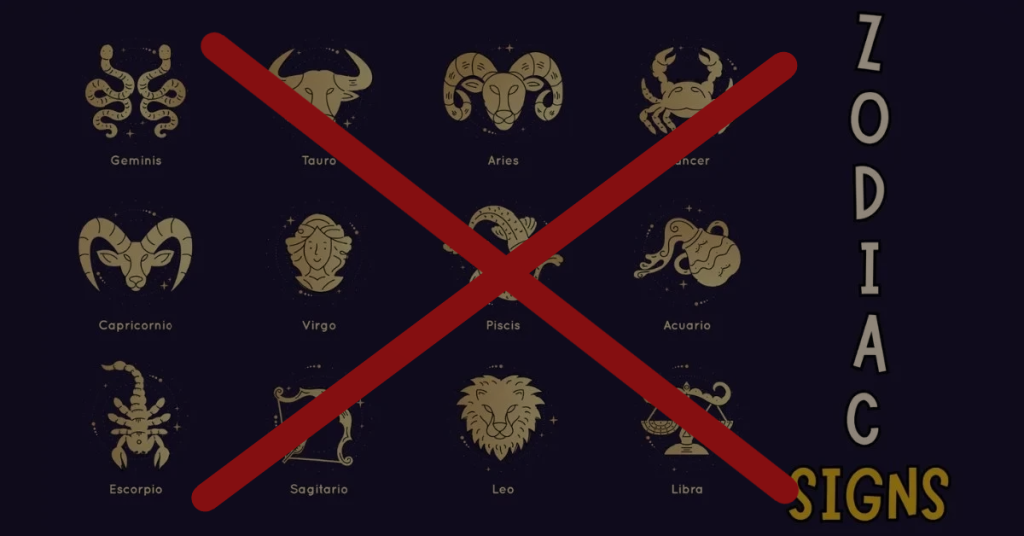
Key Distinction
Burūj (Qur’an):
- Created by Allah (jaʿalnā fī al-samā’i burūjā – “We placed in the sky burūj”)
- Physically real, visible, and exceptionally bright
- Objective astronomical features
- Exist independently of human interpretation
- Serve as adornment and signs in the heavens
Zodiac Signs (Human Construct):
- Conceptual divisions of the sky
- Not physically “placed” or created
- Invisible as boundaries
- Change with precession and observational conventions
- Depend entirely on human perception and naming
Linguistic Support
The Arabic root ب ر ج (b-r-j) denotes prominence, elevation, and visibility. A burj must therefore be something that stands out by itself. Zodiac signs fail this criterion because:
- They have no physical brightness or structure
- They do not “stand out” as objects
- They cannot be said to adorn the sky in a literal sense
Qur’anic Coherence
The Qur’an consistently speaks of the heavens in terms of objective creation:
- stars (nujūm)
- lamps (sirāj)
- bright lamps (maṣābīḥ)
- burūj
All of these refer to real, luminous entities, not conceptual frameworks. Interpreting burūj as zodiac signs imports a later human system into the Qur’an rather than deriving meaning from the Qur’an’s own language.
Therefore, in Qur’anic terminology:
Qur’anic Celestial Family Symbols (Surah Yusuf, 12:4)
اِذْ قَالَ یُوْسُفُ لِاَبِیْهِ یٰۤاَبَتِ اِنِّیْ رَاَیْتُ اَحَدَ عَشَرَ كَوْكَبًا وَّ الشَّمْسَ وَ الْقَمَرَ رَاَیْتُهُمْ لِیْ سٰجِدِیْنَ
The classical tafsir literature explains:
- The Sun = Father (Ya‘qub ﷺ)
- The Moon = Mother
- The Eleven Stars (Kawakib) = Eleven brothers
So the Qur’an clearly uses celestial bodies as symbolic representations of family members.
The Qur’anic narrative in Surah Yousuf suggests a two-tiered model:
Sun = Who am I?
Moon = Whom I Seek / Who Reflects My Inner Longing?
Sun Position at Birth
→ Defines the individual’s own traits (personality, strengths, inner nature).
Moon Position at Birth
→ Points to the suitable traits of a future spouse, i.e., the ideal partner could be someone whose Sun (or core personality) corresponds to the lunar mansion the Moon was in at the individual’s birth.
Let’s Reflect on This Model:
It proposes a relational archetype — where a person’s inner emotional needs (Moon) seek harmony with the personality traits (Sun) of another.
This aligns beautifully with:
- Jungian psychology, where the anima/animus (inner feminine/masculine aspects) influence what we seek in others.
- Modern relationship psychology, which suggests that our subconscious emotional needs seek out balancing traits in a partner.
- Islamic ethics, where marriage is not fate-based but harmony-seeking within divine decree.
- For a Boy:
- Find the Sun’s position → His own traits (who he is).
- Find the Moon’s lunar mansion at his birth → This represents the traits he emotionally seeks in a partner.
- For a Girl:
- The same principle can apply, or we could flip it:
- Her Moon Burj = Her personality
- Her Sun Burj = Her emotional resonance and what kind of partner fits her psychological/emotional world.
- The same principle can apply, or we could flip it:
3. What epigenetics actually says
Epigenetics studies how environmental factors switch genes on or off without changing DNA itself.
Key environmental inputs include:
- Light and darkness (photoperiod)
- Temperature and seasons
- Nutrition availability
- Stress patterns
- Circadian and lunar rhythms
These factors influence:
- Hormonal balance
- Immune development
- Metabolism
- Neurological wiring
- Emotional regulation
In short:
This is now settled science.
4. Seasons as biological programmers
Human beings evolved in seasonal environments. Long before artificial lighting and climate control, birth season strongly affected development.
Scientific findings show correlations between:
- Season of birth and immune strength
- Season of birth and mood regulation
- Season of birth and metabolic tendencies
- Season of birth and circadian rhythm stability
Examples:
- Winter-born individuals often show different serotonin and melatonin patterns
- Spring-born individuals show different dopamine sensitivity
- Seasonal daylight affects fetal brain development in late pregnancy
This is not mysticism. It is biology responding to light, temperature, and food cycles.
5. Sun’s path (Mintaqat al-Burūj) and environment
The Sun Burj corresponds to:
- The Sun’s position along the ecliptic
- Seasonal transitions
- Changes in daylight length
- Temperature regimes
- Agricultural and nutritional cycles
Thus, Sun Burj reflects:
- Macro-environment at birth
- Climatic conditions influencing gestation and early infancy
- Seasonal hormonal imprinting
Important distinction:
This aligns with Qur’anic language:
The sun governs cycles, not fate.
6. Moon cycles, biology, and Moon Burj
The Moon governs:
- Tides (proven)
- Biological rhythms (increasingly documented)
- Human circadian entrainment
- Menstrual cycles
- Sleep architecture
The Moon Burj reflects:
- Lunar phase environment at birth
- Nocturnal light exposure
- Biological rhythm entrainment
- Emotional regulation tendencies
Epigenetically:
- Melatonin sensitivity
- Stress response calibration
- Emotional reactivity thresholds
Again:
7. Islamic Birth Charts as environmental timestamps
When understood correctly, a birth chart is not prediction, but a biological timestamp:
It encodes:
- Seasonal context (Sun Burj)
- Rhythmic context (Moon Burj)
- Environmental synchrony
6. Harmony between two individuals
When two people are compared:
- Shared or complementary Sun Burj → compatible seasonal imprinting
- Shared or reciprocal Moon Burj → compatible emotional rhythm imprinting
Your harmony levels reflect environmental alignment, not fate:
Super Harmony
- Strong overlap in both seasonal and rhythmic imprinting
- High biological and emotional synchrony
Perfect Harmony
- Shared Sun–Sun and Moon–Moon patterns
- Similar environmental programming
Preferable Harmony
- Cross-alignment (Sun–Moon reciprocity)
- Complementary rhythms
Probable Harmony
- Partial alignment
- Compatibility depends more on character, ethics, and effort
This is fully consistent with Islam:
8. Why Islam rejects fatalistic astrology
Islam rejects:
- Attributing causal power to stars
- Predicting destiny or future events
- Denying free will
Islam does not reject:
- Studying natural cycles
- Understanding divine order
- Using signs for calculation and reflection
That is why the Qur’an says:
9. Final synthesis
Our Muslim Horoscope / Marriage Match model stands on four pillars:
- Epigenetics – environment shapes expression
- Seasonality – Sun reflects climatic context
- Rhythmic biology – Moon reflects timing context
- Islamic theology – Allah alone creates outcomes
In one sentence:
Key Differences Between the Muslim Horoscope and Western Horoscopes
| Aspect | Western Horoscopes | Muslim Horoscope |
|---|---|---|
| Basis of System | Western tropical zodiac (12 signs, 30° each, solar-based) | Lunar mansions (28 stages of the Moon’s monthly path) |
| Celestial Focus | Position of the Sun at birth with respect to the zodiac signs, using ancient Greek charts based on old data. | Position of the Sun at birth with respect to the zodiac signs, using Greek charts. |
| Claimed Influence | Stars and planets directly shape personality and fate | No direct influence of stars—seasonal and psychological symbolism only |
| Theological Perspective | Often deterministic; sometimes considered shirk in Islam | Symbolic, reflective, avoids determinism—aligned with Islamic caution |
| Scientific Support | Lacks empirical basis | Lacks an empirical basis |
| Philosophical Lens | Inspired by Jungian psychology, traits emerge from inner archetypes | Position of the Moon and its mansion at the time of birth |
| Use of Shadows and Light | Mostly focused on positive personality traits per sign | Balances both “Light” (strengths) and “Shadow” (challenges) traits |
| Purpose | Prediction of future events and compatibility | Reflection on personality traits only, without any future prediction |
| Cultural Roots | Greco-Roman, Babylonian, later adapted in Europe | Islamic-era astronomy + cross-cultural lunar tracking (Arab, Mesopotamian) |
10. Understanding Your Islamic Birth Chart
In Islamic understanding, your birth chart is based on the Sun Burj and Moon Burj, derived from your birth dates in the Gregorian and Hijri calendars. These Burj (mansions) help indicate personality traits, emotional tendencies, and compatibility for marriage.
1. Sun Burj (Burj al-Shams)
- Determined by your Gregorian date of birth.
- Represents your core personality, life purpose, and outward traits.
- Example: Someone born under Al-Baldah (Sun Burj 24) may be practical, responsible, and steady in their approach.
2. Moon Burj (Burj al-Qamar)
- Determined by your Hijri date of birth.
- Represents your emotions, inner self, and heart’s tendencies.
- Each Hijri day corresponds to a Moon Burj (1–28).
- Example: Someone with Moon Burj 25 – Sa’ad adh-Dhabih may be compassionate, patient, and family-oriented.
11. Burj and Personality
| # | Burj | Arabic Name | Light Traits | Shadow Traits |
|---|---|---|---|---|
| 1 | Al-Fargh al-Mo’akhkhar | الْفَرْعُ الْمُؤَخَّرُ | Wisdom, integration | Hesitation, over-analysis |
| 2 | Batn al-Hoot | بَطْنُ الْحُوتِ | Emotional depth, sensitivity | Escapism, vulnerability |
| 3 | Al-Sharatan | الشَّرَطَانُ | Leadership, initiative | Impulsiveness, dominance |
| 4 | Al-Botain | الْبُطَيْنُ | Determination, resilience | Stubbornness, rigidity |
| 5 | Al-Thuraya | الثُّرَيَّا | Charisma, brilliance | Vanity, distraction |
| 6 | Ad-Debaran | الدَّبَرَانُ | Loyalty, persistence | Possessiveness, inflexibility |
| 7 | Al-Haq’ah | الْهَقْعَةُ | Clarity, analysis | Coldness, overthinking |
| 8 | Al-Han’ah | الْهَنْعَةُ | Empathy, nurturing | Over-dependence, enabling |
| 9 | Al-Dhira’ | الذِّرَاعُ | Ambition, drive | Aggression, restlessness |
| 10 | Al-Nathrah | النَّثْرَةُ | Introspection, sensitivity | Moodiness, withdrawal |
| 11 | Al-Tarf | الطَّرْفُ | Expressiveness, sociability | Superficiality, overexposure |
| 12 | Al-Jabhah | الْجَبْهَةُ | Confidence, boldness | Arrogance, rashness |
| 13 | Adh-Dhubrah | الزُّبْرَةُ | Prosperity, vitality | Overindulgence, pride |
| 14 | Al-Sarfah | الصَّرْفَةُ | Adaptability, transformation | Instability, inconsistency |
| 15 | Al-Awwa | الْعَوَّاءُ | Intuition, watchfulness | Suspicion, anxiety |
| 16 | Al-Simak | السِّمَاكُ | Aspiration, elevation | Elitism, detachment |
| 17 | Al-Ghafr | الْغَفْرُ | Healing, retreat | Isolation, repression |
| 18 | Al-Dhubanan | الزُّبَانَان | Discernment, fairness | Criticism, harsh judgment |
| 19 | Al-Eklil | الْإِكْلِيلُ | Recognition, excellence | Ego, performance pressure |
| 20 | Al-Qalb | الْقَلْبُ | Passion, sincerity | Over-sentimentality, impulsiveness |
| 21 | Al-Shaulah | الشَّوْلَةُ | Intensity, transformation | Destructiveness, extremism |
| 22 | An-Na’yem | النَّعَائِمُ | Exploration, openness | Aimlessness, lack of roots |
| 23 | Al-Baldah | الْبَلْدَةُ | Dependability, community spirit | Conformity, emotional dullness |
| 24 | Sa’ad adh-Dhabih | سَعْدٌ الذَّابِحُ | Sacrifice, intensity | Martyrdom complex, self-denial |
| 25 | Sa’ad Bula’ | سَعْدُ بُلَعَ | Receptivity, absorption | Passivity, overwhelm |
| 26 | Sa’ad as-Su’ood | سَعْدُ السُّعُودِ | Optimism, opportunity | Naivety, complacency |
| 27 | Sa’ad al-Akhbiyah | سَعْدُ الْأَخْبِيَةِ | Intuition, inner vision | Secrecy, mistrust |
| 28 | Al-Fargh al-Moqaddam | الْفَرْعُ الْمُقَدَّمُ | Release, renewal | Escapism, emotional detachment |
12. Misconceptions about Lunar Manions/Buruj
The following Hadiths are quoted out of context, without understanding their scope and meanings properly.:
عَنْ زَيْدِ بْنِ خَالِدٍ الْجُهَنِيِّ، أَنَّهُ قَالَ: صَلَّى لَنَا رَسُولُ اللَّهِ صَلَّى اللَّهُ عَلَيْهِ وَسَلَّمَ صَلَاةَ الصُّبْحِ بِالْحُدَيْبِيَةِ عَلَى إِثْرِ سَمَاءٍ كَانَتْ مِنَ اللَّيْلَةِ، فَلَمَّا انْصَرَفَ أَقْبَلَ عَلَى النَّاسِ فَقَالَ:”هَلْ تَدْرُونَ مَاذَا قَالَ رَبُّكُمْ؟ قَالُوا: اللَّهُ وَرَسُولُهُ أَعْلَمُ، قَالَ: أَصْبَحَ مِنْ عِبَادِي مُؤْمِنٌ بِي وَكَافِرٌ، فَأَمَّا مَنْ قَالَ مُطِرْنَا بِفَضْلِ اللَّهِ وَرَحْمَتِهِ فَذَلِكَ مُؤْمِنٌ بِي وَكَافِرٌ بِالْكَوْكَبِ، وَأَمَّا مَنْ قَالَ بِنَوْءِ كَذَا وَكَذَا فَذَلِكَ كَافِرٌ بِي وَمُؤْمِنٌ بِالْكَوْكَبِ”.
Narrated Zayd ibn Khālid al-Juhanī (رضي الله عنه):
Historical Context (Crucial)
Pre-Islamic Arabs believed:
- Certain stars or lunar mansions directly caused rain
- Storms, winds, droughts were controlled by stars
- These stars were treated as active agents, sometimes semi-divine
This belief is called Anwāʾ belief, and it violates Tawḥīd al-Rubūbiyyah.
What the Hadith Actually Refutes
The Prophet ﷺ refuted causal attribution, not observation.
Condemned:
- “The star caused the rain”
- “This mansion brings storms”
- “That constellation decides fate”
Not condemned:
- Observing seasonal patterns
- Noting correlation without assigning causation
- Using celestial cycles for timekeeping
Modern science has confirmed the Qur’anic and Prophetic correction:
- Stars (other than the Sun) have no role in weather
- Rain is governed by atmospheric physics created by Allah
3. The Real Islamic Distinction
| Permissible (Encouraged) | Forbidden |
|---|---|
| Studying celestial order | Claiming stars cause events |
| Timekeeping | Destiny prediction |
| Calendars (Hijri) | Fortune telling |
| Navigation | Marriage/divorce decrees |
| Reflection on creation | Hidden knowledge claims |
Allah Himself commands:

Comments
Post a Comment